- Product Design
- Web
- Design System
Designing the Open Campus Ecosystem
Open Campus grew from one education product into an ecosystem reaching 60 million learners. As its sole lead designer, Raymond designed almost everything it shipped on the web, from the brand system and EDU Chain to Open Campus ID and the AI-first relaunch.
- Client
- Animoca Brands / Open Campus
- Year
- 2023–2026
- Led by
- Ray
- Status
- Shipped
The problem
Open Campus moved fast. In a few years it went from a single idea, putting education on-chain, to a family of products: a blockchain for education, a portable learner identity, an accelerator, a rewards programme and a public website, each launched against a different deadline. Without one design language, it risked looking like several companies instead of one, to learners, partners and investors alike.
What we did
Raymond was the sole and lead designer on the Open Campus team, responsible for almost every web and product design it shipped:
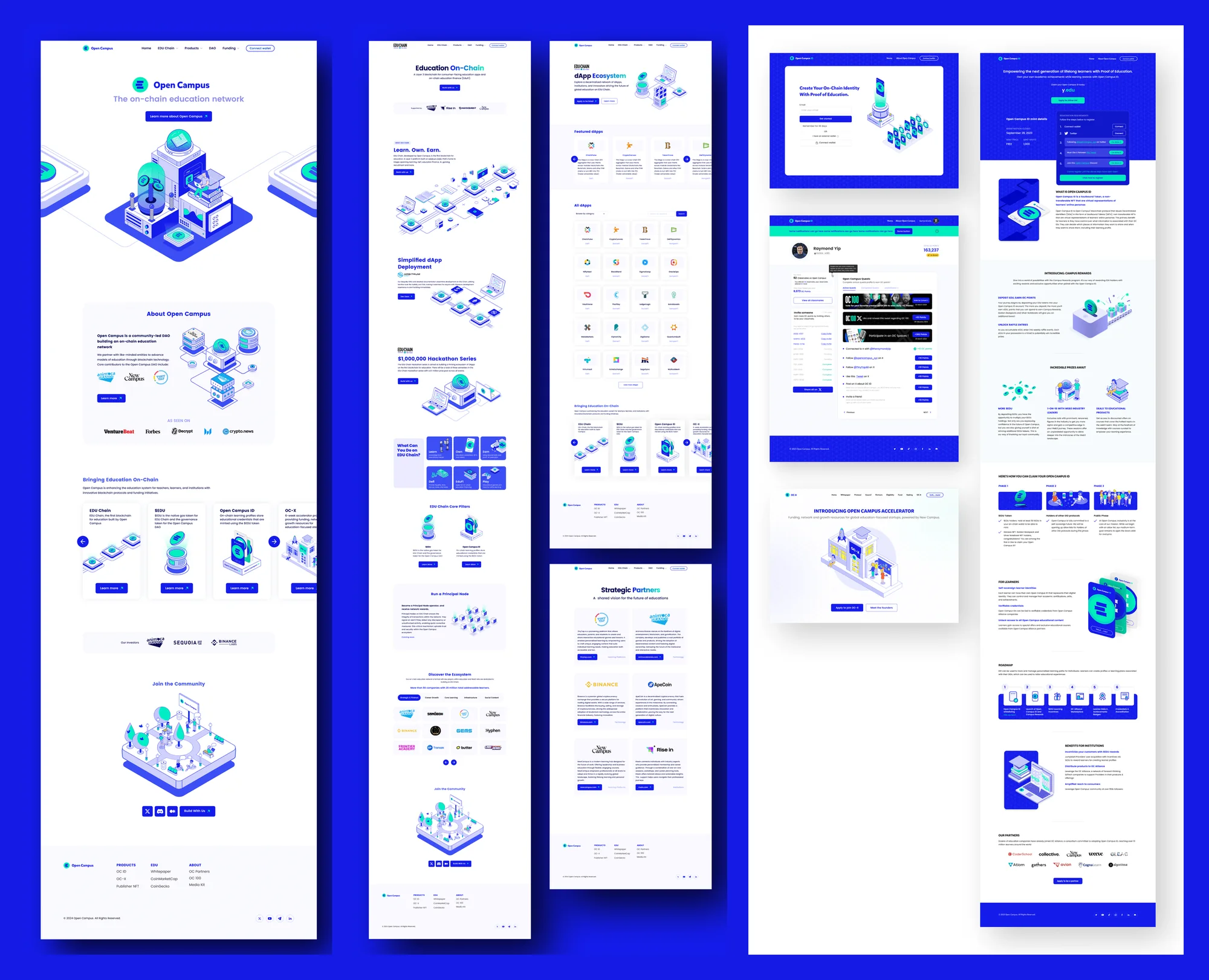
- Open Campus ID, the identity layer that ties the products together, from sign-up to the learner profile.
- EDU Chain, its dApp ecosystem and the $1,000,000 hackathon series.
- The OC-X accelerator, the rewards programme and the partner pages.
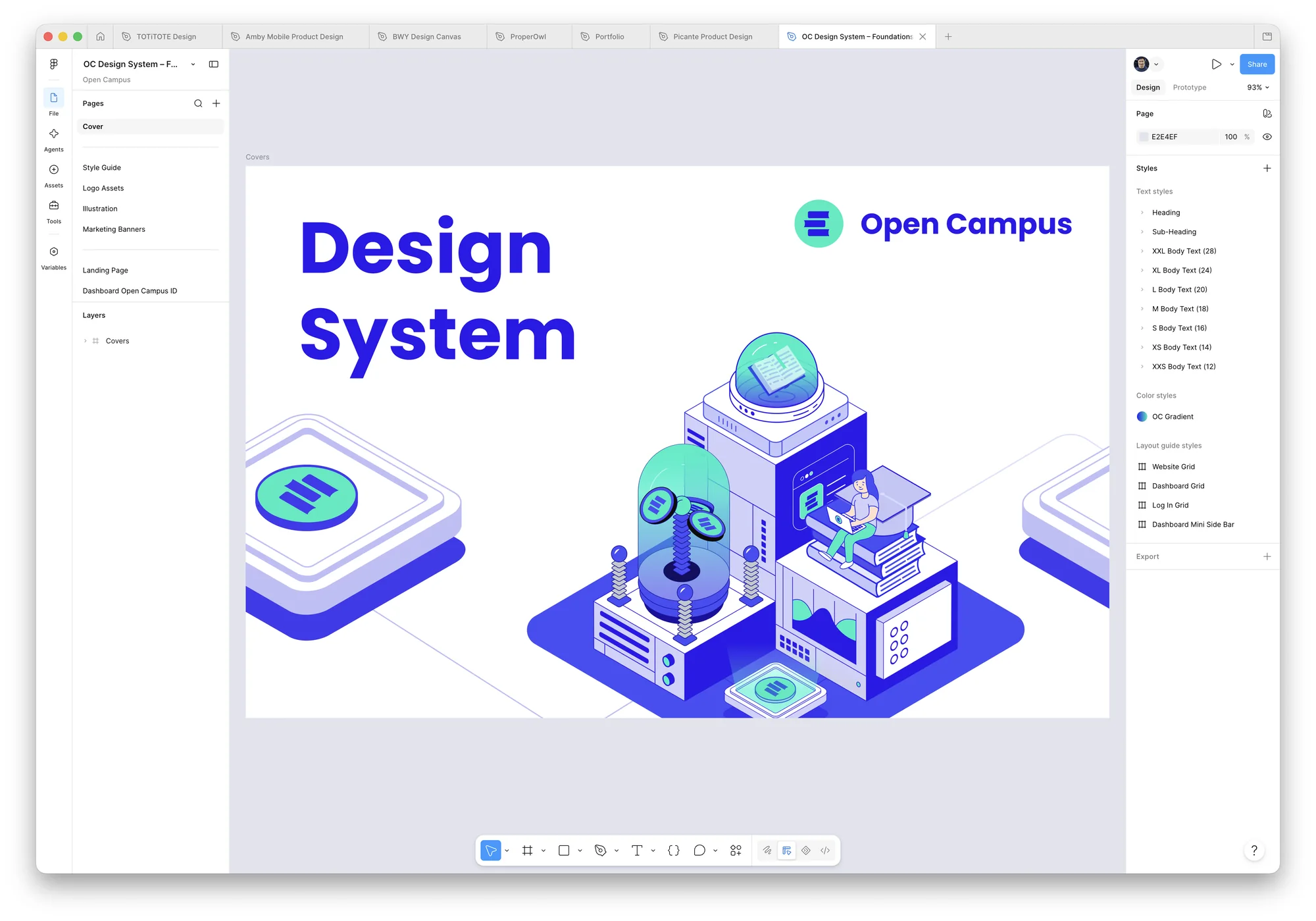
- A shared design system, so every product looked and worked like the same company.
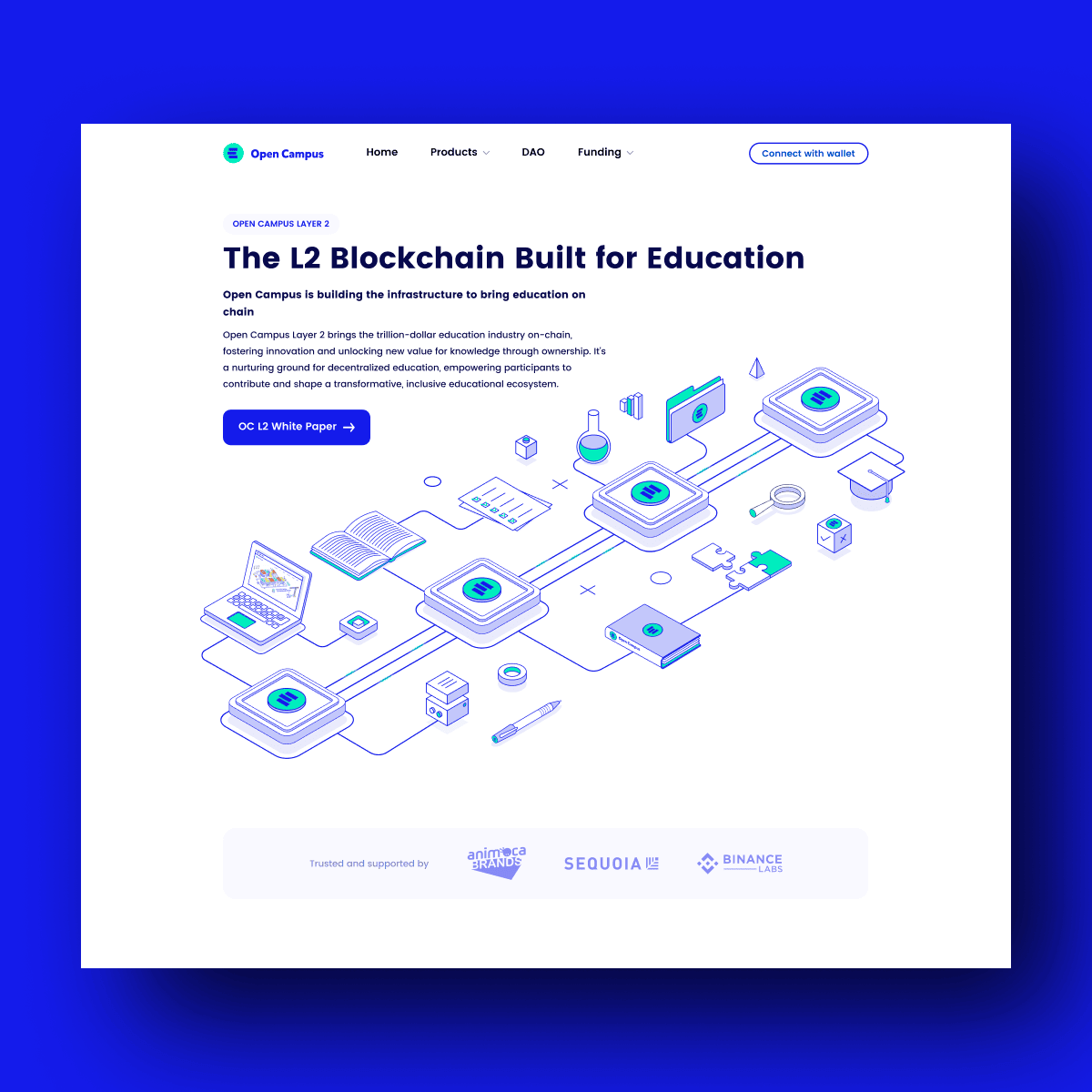
- The website, twice: first as the home of the on-chain education network, then relaunched as an AI-first platform for lifelong learning.
One design system for everything
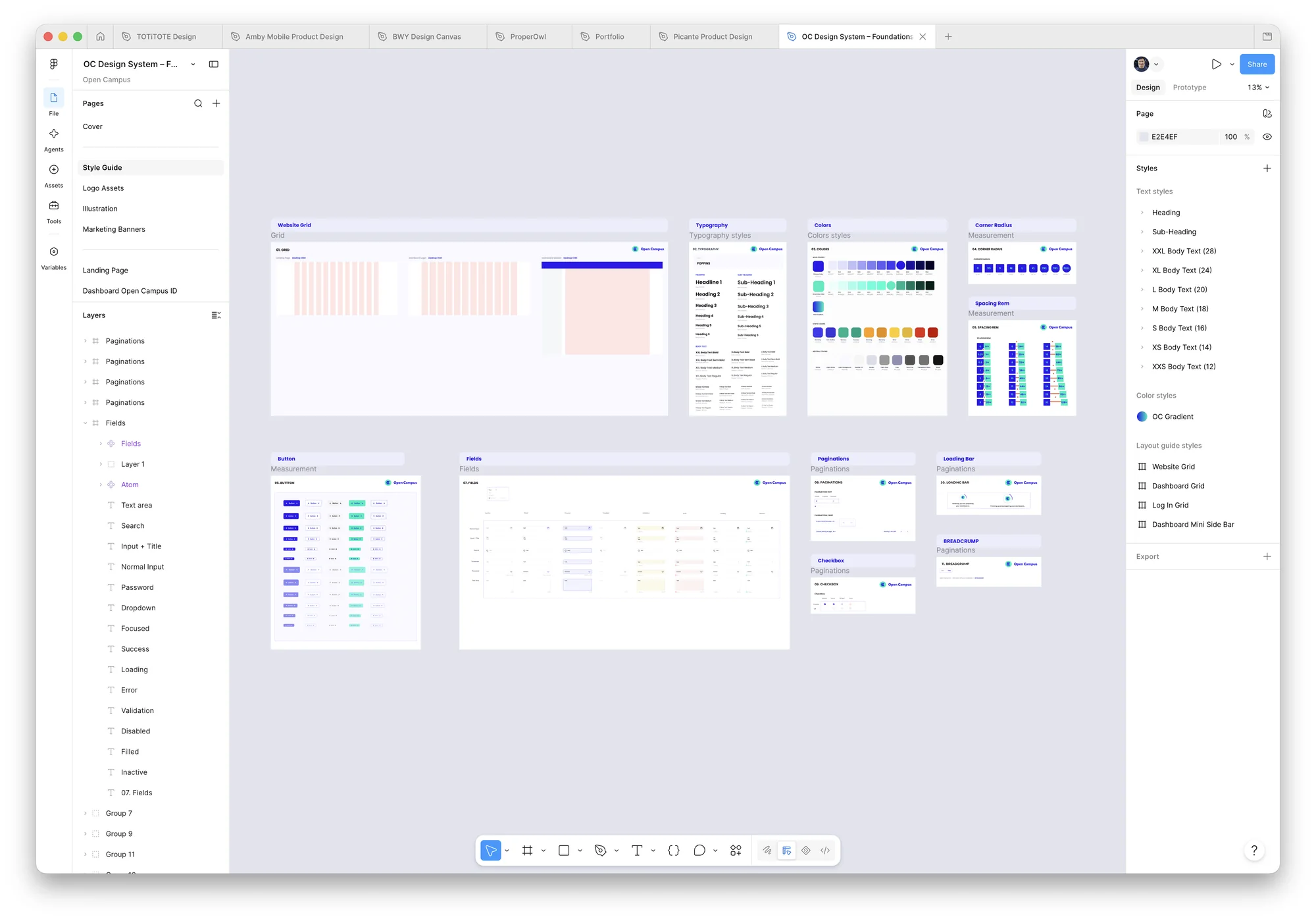
As the product family grew, the design system did the heavy lifting. Typography, colour, grids for the website, dashboards and sign-in, buttons, form fields and states were all defined once in Figma and shared by every team. New pages could be designed and built in days rather than weeks, and every launch still looked like Open Campus.
An AI-first relaunch
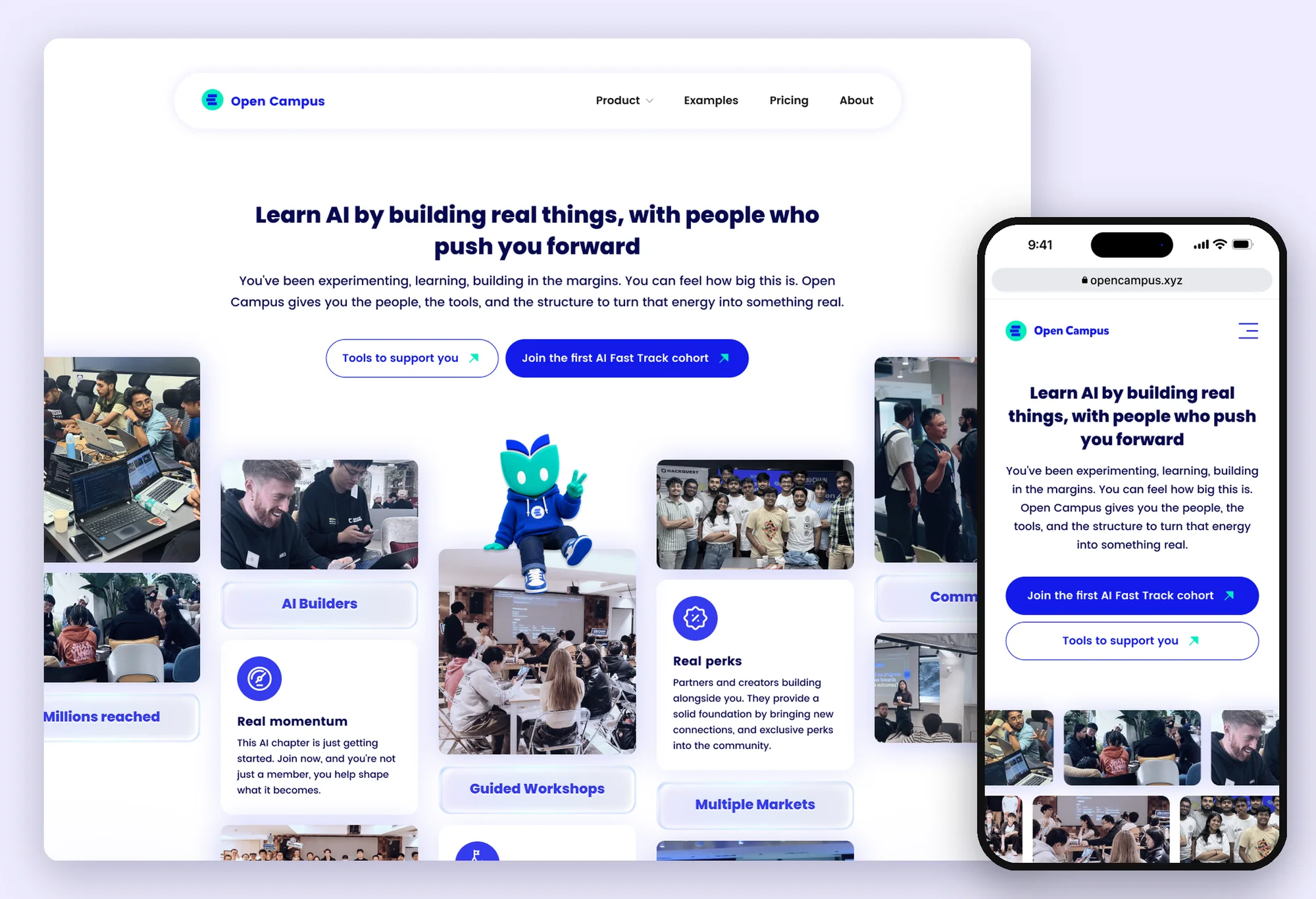
As Open Campus moved into AI, the website was redesigned around people instead of protocols. Real photography from workshops and hackathons, a friendlier mascot, OC Minds (the personal AI partners) and clear paths for learners, builders and partners, designed for mobile and desktop together.
The outcome
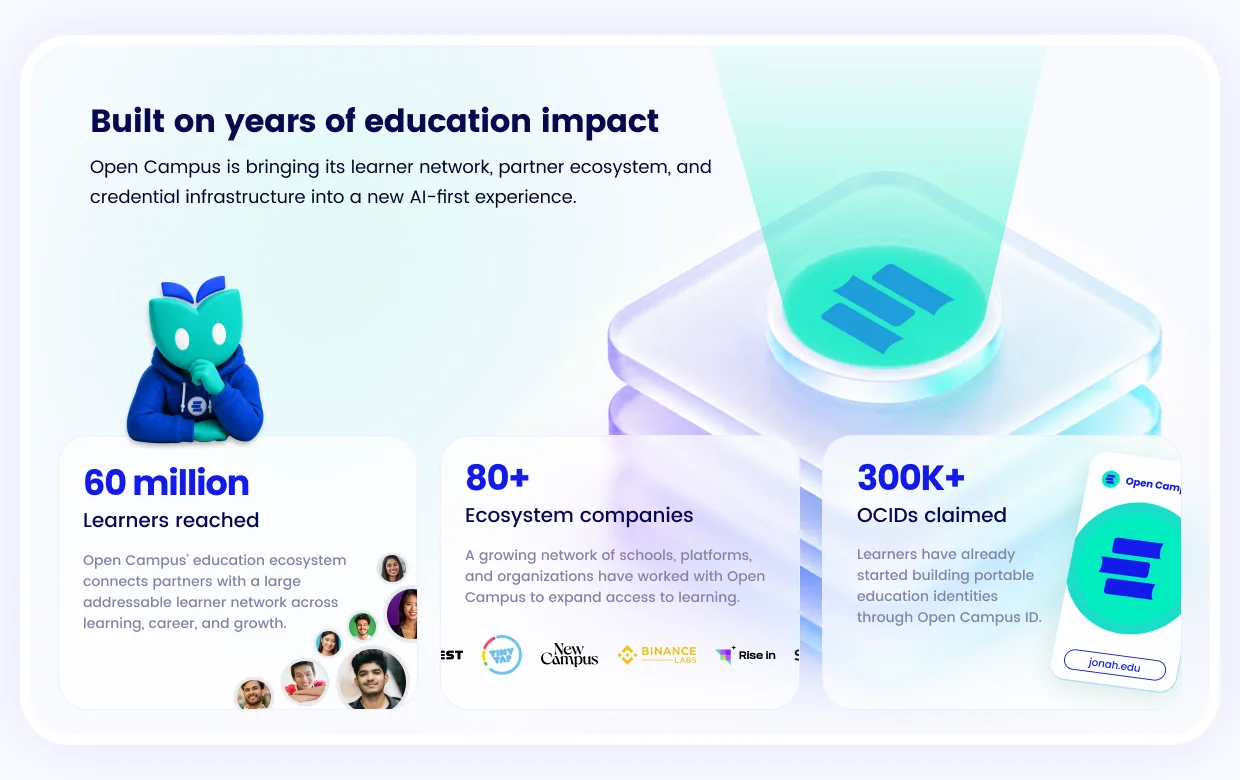
Open Campus grew into an education network spanning learners, schools, companies and governments, and now carries it into AI. The products Raymond designed are the front door to all of it.
Why it matters
Growing products sprawl. A single designer with a clear system kept a fast-moving, many-product company feeling like one place, and that consistency is what lets every launch build on the last instead of starting over.